Indoor Cat Enrichment: DIY Toys, Play & Home Upgrades
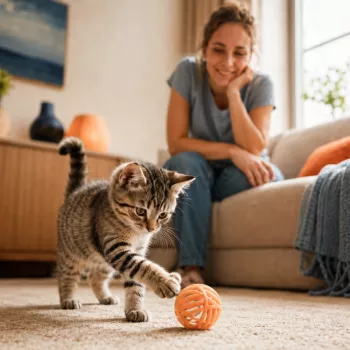
Enrichment Ideas for Indoor Cats: Simple DIY Toys, Play Routines, and Home Tweaks That Keep Cats Busy
Indoor life can be safe and cozy, but it can also get repetitive fast—especially for cats built to stalk, climb, scratch, and explore. Our team put this together as an easy “print-and-play” plan: choose a few enrichment options, rotate them through the week, and match activities to the behaviors your cat naturally needs to express. The goal is less boredom (and fewer midnight zoomies), more calm confidence, and a home setup that supports healthy daily outlets.
What “enrichment” really means for an indoor cat
Enrichment isn’t just “more toys.” It’s giving your cat safe ways to do cat things: hunting (stalking/chasing), foraging (working for food), climbing (vertical territory), scratching (scent + nail maintenance), and hiding/resting (security).
When those needs are met consistently, many behavior headaches ease up. Attention-seeking yowling, “random” biting, over-grooming, ankle ambushes, knocking items off surfaces, and even litter box stress can be influenced by unmet activity and a lack of predictable outlets.
We like to think of enrichment in three layers:
- Daily movement and play (small, repeatable sessions)
- Home layout that supports choice and control (routes, perches, scratch zones, retreats)
- Novelty through rotation (small changes beat constant new purchases)
Keep sessions short. Most cats prefer multiple 3–10 minute bursts rather than one long “marathon” playtime.
How to use a printable enrichment guide (a routine, not a one-time checklist)
If you want this to actually stick, visibility helps. Print one copy for the fridge and keep one in a binder or pet folder so routines stay easy to follow. Consistency matters more than complexity.
Start with a baseline week:
- 1 hunting-style play session daily
- 1 foraging option daily
- 1 comfort/territory upgrade you keep steady (like a scratch “lane” or a window perch)
Rotate only one category at a time. For example: keep the same wand toy for three days while rotating treat puzzles; then swap the toy and keep the puzzle consistent. Your notes can be simple—time of day, energy level, favorite toy type, and triggers (guests, vacuum time). Patterns show up quickly.
Adjust for age and ability: kittens often do best with more frequent bursts; seniors usually prefer gentler play plus warm resting spots and easy “step” routes to favorite areas.
A simple weekly play routine (hunt, catch, eat, rest)
The most reliable rhythm is: Hunt → Catch → Eat → Rest. It mirrors natural feline cycles and reduces frustration after play—especially for cats that get revved up and then seem cranky or nippy.
Anchor play at predictable times (morning and evening are common winners), then add a bonus mini-session when energy spikes. Match the play style to your cat:
Printable 7-Day Indoor Cat Enrichment Plan (mix-and-match)
| Day | Hunt/Play (5–10 min) | Foraging (2–5 min) | Home Tip (set-and-forget upgrade) |
|---|---|---|---|
| Mon | Wand toy: low-to-ground “mouse” zigzags | Treat scatter in a snuffle mat or towel folds | Refresh scratch zones (one vertical, one horizontal) |
| Tue | Flashlight “chase” on wall + finish with a toy catch | Cardboard box puzzle with kibble under paper | Add a window perch or clear a sunny ledge |
| Wed | Toss-and-chase soft ball down a hallway | Food in a puzzle feeder or slow feeder | Create a quiet hideout (blanket tent or covered bed) |
| Thu | Feather teaser: “bird” up high, then land and scuttle | Kibble trail across 3 rooms for a mini “hunt” | Add a step-stool route to a favorite spot |
| Fri | Kicker toy session (wrestle + bunny kicks) | Treats in an egg carton (supervised) | Cat-safe plant alternative: grow cat grass in a stable pot |
| Sat | Two-toy method: chase toy A, catch toy B | Paper bag forage (handles removed), a few treats inside | Scent swap: rotate a blanket or towel to a new room |
| Sun | Calm play: slow wand, short sprints only | Lick mat with a small smear of cat-safe wet food | Reset “cat lanes”: clear a path along walls and furniture |
DIY toys and brain games using household items (safe, cheap, effective)
Cat-friendly home tips: vertical space, scratch lanes, and safe retreats
Safety and troubleshooting for real-life schedules
For deeper, research-backed guidance on cat environmental needs, these references are worth your time: American Association of Feline Practitioners (AAFP) – Feline Environmental Needs Guidelines and International Cat Care – Environmental enrichment for cats.
Helpful printables from our shop
- Enrichment Ideas for Indoor Cats | Printable Cat Enrichment Guide | DIY Toys, Play Routines, and Cat-Friendly Home Tips (USD 6.99)
- Must-Know Pet First-Aid Cheat Sheet | Emergency Printable Guide for Pet Owners | Vet Tips (USD 7.99)
- A Guide to Safe Space Mapping | Digital Ebook on Understanding, Creating & Using Safe Spaces (USD 16.99)
FAQ
How much playtime does an indoor cat need each day?
A practical baseline is one or two 5–10 minute play sessions daily, plus an optional 2–5 minute mini-session when your cat gets a burst of energy. Kittens often need more frequent bursts, while seniors usually do best with shorter, gentler play. If you can, finish with the hunt-catch-eat-rest sequence to help your cat settle.
What are the safest DIY enrichment ideas for cats?
Cardboard boxes, crumpled paper balls, towel “forage rolls,” and supervised paper-bag foraging (handles removed) are simple and low-risk for most cats. Avoid loose strings, rubber bands, and small parts that can be swallowed, and supervise DIY sock kickers if your cat is a dedicated chewer.
How do you keep a cat entertained while working from home?
Use predictable “anchors”: a short play session before you start work and another after, then add one independent foraging setup during a meeting block. Window perch time, a small rotation bin of toys, and a consistent daily routine reduce demand behaviors and help your cat self-settle between check-ins.










Leave a comment