New Kitten Feeding Plan: Food, Portions & Schedule
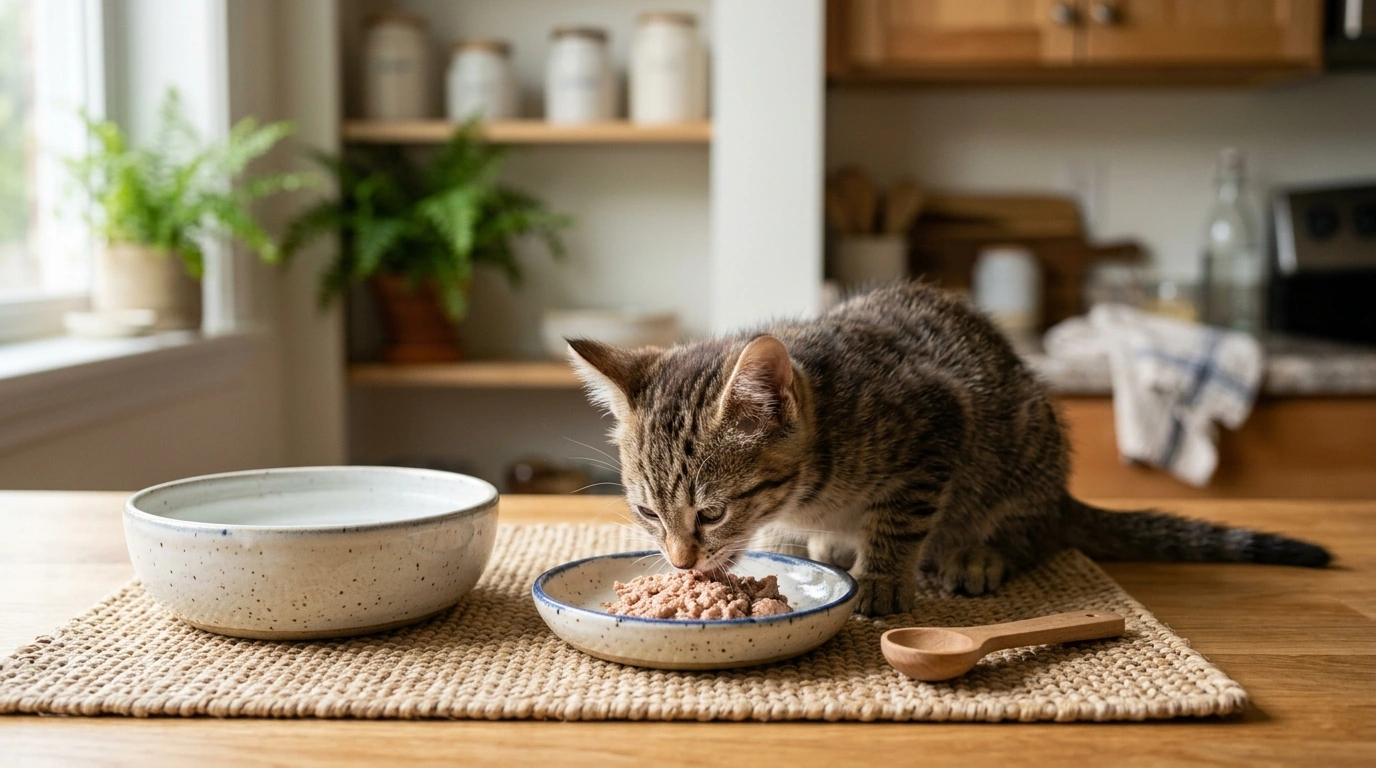
Feeding Your New Kitten Right: A Simple Plan for Healthy Growth and Happy Mealtimes
Bringing home a kitten is exciting—until mealtime questions start piling up: wet or dry, how much, how often, and what’s actually safe. Our team put together a practical, low-stress feeding plan for your first weeks at home, so you can choose a kitten-appropriate diet, lock in a routine, and skip the common mistakes that can upset tiny stomachs.
Start with the goal: growth, hydration, and steady energy
When you’re choosing food for a kitten, the “best” option is the one that reliably supports healthy development and agrees with your kitten’s digestion.
- Pick a life-stage label that matches growth. Look for food labeled for “growth” or “all life stages,” which is formulated with kitten development in mind (including higher energy needs).
- Keep the main diet doing the heavy lifting. Choose a complete-and-balanced formula as the daily foundation; treats and toppers should stay a small bonus.
- Plan for hydration. Some kittens eat enthusiastically but drink inconsistently. Wet food (or adding a little water to wet food) can help support fluid intake.
- Consistency beats constant switching. Small digestive systems do best with predictable meals and slow, deliberate changes.
What food to start a new kitten on (without overcomplicating it)
The smoothest start usually comes from keeping things familiar, then improving the routine gradually once your kitten is settled.
- Start with what your kitten already knows. If your kitten came from a breeder, shelter, or foster, begin with the same food for the first several days when possible to reduce transition stress.
- Confirm it’s complete and balanced. Look for a reputable brand and a nutritional adequacy statement on the label (AAFCO guidance can help you interpret labels clearly).
- Wet, dry, or both can work. Wet food supports moisture and is often easier for young kittens to chew; dry can be convenient for measured portions and some grazing households. Many homes use a combo approach.
- Avoid cow’s milk and random table scraps. Sensitive digestion plus unknown ingredients can trigger diarrhea or vomiting fast.
Quick guide: common starter options and when they fit best
| Option | Why it works for many kittens | Watch-outs | Best for |
|---|---|---|---|
| Kitten wet food (pâté or minced) | Higher moisture; typically very palatable; easy to portion | Can spoil if left out too long; needs refrigeration after opening | Kittens that don’t drink much; picky eaters; households feeding set meals |
| Kitten dry kibble | Convenient; easy to measure; can stay out a bit longer | Lower moisture; some kittens eat too fast; can be harder for very young kittens | Busy schedules; kittens that like to nibble; multi-cat setups (with monitoring) |
| Mixed wet + dry routine | Balances hydration and convenience; flexible for training and routines | Requires a plan to avoid overfeeding | Most households looking for a practical middle ground |
| Veterinary therapeutic diet (only if prescribed) | Targets a diagnosed issue with nutritional support | Not needed for healthy kittens unless directed by a vet | Kittens with medical needs under veterinary guidance |
A calm first-week feeding routine (and how often to feed)
Routine reduces stress—for you and your kitten. The first week is about predictability and observation.
- Keep meal times consistent. Kittens learn quickly when food is coming, which often reduces frantic begging and scarfing.
- Offer smaller meals more often. Many kittens do better with multiple smaller meals across the day rather than one or two large meals.
- Start measured, then adjust. Use package guidance as a starting point and adjust based on appetite, body condition, and growth.
- Always provide fresh water. A wide, shallow bowl can be more comfortable; some kittens prefer moving water from a fountain.
- Choose a quiet feeding spot. Keep food away from the litter box and away from stressful traffic (dogs, loud appliances, busy hallways).
Portioning without guesswork: how to avoid underfeeding or overfeeding
Growing kittens need a lot of calories for their size, but it’s still possible to overdo it—especially with extras.
Safe transitions: switching foods and introducing variety
Common feeding mistakes (and easy fixes)
Make mealtimes easier with a step-by-step nutrition roadmap
If you want a clear plan you can actually follow day to day, our team created Feeding Your New Kitten Right | Essential Kitten Nutrition eBook. It’s designed to help you choose a suitable starter food, set a routine you can maintain, and handle transitions without constant second-guessing.
Because “what if something goes wrong?” tends to show up right when you’re settling in, many kitten households also keep our Must-Know Pet First-Aid Cheat Sheet | Emergency Printable Guide for Pet Owners nearby for quick-reference basics during common pet mishaps.
And if your kitten is skipping meals due to stress or hiding, building a calmer home setup can help—our A Guide to Safe Space Mapping | Digital Ebook can help you map quiet zones that support a more relaxed appetite.
Trusted nutrition references (if you want to go deeper)
FAQ
Should a new kitten start with wet food or dry food?
Either can work as long as it’s complete-and-balanced for growth. Wet food supports hydration, dry food is convenient for measuring and some grazing routines, and many households do best with a simple wet-and-dry combination while keeping changes gradual.
How often should a kitten eat each day?
Most kittens do well with multiple small meals spaced throughout the day, especially early on. Use the feeding guide on your kitten food as a starting point and adjust based on appetite, growth, and your veterinarian’s advice for any special needs.
What should be avoided when feeding a new kitten?
Avoid cow’s milk, sudden food switches, and too many treats or rich toppers that crowd out balanced nutrition. Also avoid leaving wet food out too long and feeding unbalanced homemade diets unless a veterinary nutrition professional formulated the recipe.











Leave a comment