Printable Pet First Aid Cheat Sheet for Emergencies
Must-Know Pet First-Aid Cheat Sheet: A Calm, Printable Guide for Real Emergencies
Emergencies with pets rarely happen when it’s convenient. The goal isn’t to “play vet” at home—it’s to stay calm, protect everyone’s safety, and take the right first steps while getting professional care fast. Our team created the Must-Know Pet First-Aid Cheat Sheet (printable emergency guide) to give you clear actions, vet-minded reminders, and fewer panicked guesses when time matters.
What this cheat sheet is designed to do (and what it isn’t)
When you’re scared, your brain wants to sprint ahead. A simple checklist keeps you grounded.
- Supports fast decisions under stress: plain language steps that prioritize safety and speed.
- Reduces delays: helps you keep key actions and emergency contacts visible (fridge, pet go-bag, car).
- Centers on triage basics: stabilize what you can, prevent worsening, then get to a veterinarian or emergency clinic.
- Not a replacement for veterinary care: especially for poisoning, severe bleeding, breathing trouble, collapse, or seizures—those are “call now” situations.
If you want a deeper overview from veterinary and emergency-care organizations, see the AVMA first-aid tips, the ASPCA Animal Poison Control Center, and the American Red Cross pet first aid basics.
The first 60 seconds: a simple emergency flow
In the first minute, you’re trying to prevent a second injury (to you or your pet) and decide if this is an immediate “go now” emergency.
- Check the scene before touching your pet: traffic, other animals, broken glass, smoke, electrical cords, or chemicals.
- Approach safely: injured pets may bite from fear or pain. Use a calm voice and avoid sudden movements.
- Do a quick scan: breathing, bleeding, consciousness, ability to stand, and obvious trauma.
- If breathing is difficult, bleeding is heavy, or your pet collapses: treat it as an emergency—call the nearest emergency vet and start transport.
- Call ahead whenever possible: it speeds up intake and helps the clinic prepare (especially for toxins and trauma).
Fast triage: what to do right now
| What you notice | First step at home | Go now? |
|---|---|---|
| Trouble breathing, blue/pale gums, collapse | Keep airway clear, minimize stress, transport immediately | Yes—emergency vet now |
| Heavy bleeding or blood soaking through cloth | Apply firm pressure with clean cloth/gauze; keep pressure constant | Yes—urgent |
| Suspected poisoning (chewed meds, chemicals, toxic plants) | Remove access; save packaging; call poison helpline/vet before inducing anything | Yes—call immediately |
| Seizure | Keep pet away from stairs/objects; time it; do not put hands near mouth | Yes—if first seizure, prolonged, or repeated |
| Limping or possible fracture | Restrict movement; support with a towel sling if needed | Often—call vet for guidance |
| Vomiting/diarrhea without collapse | Offer small sips of water; watch for lethargy/blood; call if persistent | Sometimes—depends on severity |
Core first-aid actions every pet owner should have on hand
These are the “do the most good with the least risk” steps—exactly the kind of guidance you want in a printable reference.
- Bleeding control: use a clean cloth or gauze with steady, direct pressure. If you wrap, keep it snug but not tight; check toes/paws for warmth and normal color.
- Wound basics: gently rinse with clean water or saline. Avoid harsh disinfectants unless a veterinarian tells you to use them.
- Heat and cold concerns: move your pet to a cooler/warmer environment first, then transport. Temperature extremes can worsen quickly and can mask other problems.
- Choking risk: if your pet can breathe or cough, avoid blind finger sweeps. Stress and rough handling can push an object deeper—seek urgent care.
- Bite and scratch safety: cats and small dogs can be towel-wrapped for control. A soft muzzle is only appropriate if breathing is normal and vomiting is not happening.
- Toxin exposure: keep the label/ingredients, note the time and estimated amount, and get veterinary direction before trying home remedies.
Build a pet first-aid kit that actually gets used
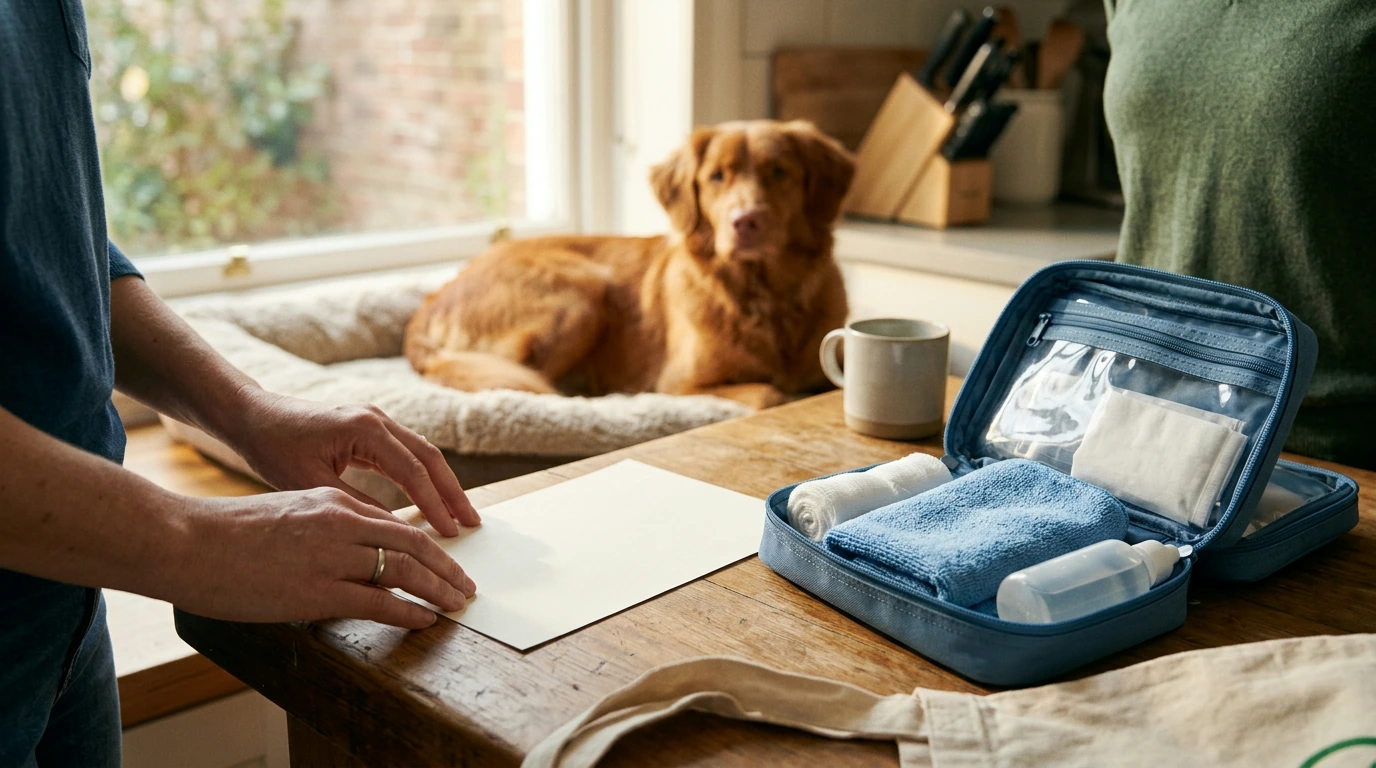
A first-aid kit doesn’t help if it’s scattered across drawers. Keep it grab-and-go, and pair it with a printed guide so you don’t rely on memory.
Our team recommends keeping the Must-Know Pet First-Aid Cheat Sheet inside the kit lid so the steps are visible the moment you open it.
Where to keep the printable so it helps when it matters
Smart next steps: prepare now to reduce panic later
If emergency calls, maps, or online intake forms make you freeze up, our team also keeps Digital Literacy for Everyday Life (quick confidence with emergency calls, maps, and online forms) in stock to help you feel steady when you need information fast.
Recommended printables and guides from our store
- Must-Know Pet First-Aid Cheat Sheet | Emergency Printable Guide for Pet Owners | Vet Tips
- Digital Literacy for Everyday Life | Digital Skills Guide PDF, Safe Internet Use, Online Communication Etiquette, Tech Confidence eBook, Digital Competence Checklist
FAQ
Should hydrogen peroxide be used to make a dog vomit after eating something dangerous?
Sometimes inducing vomiting is recommended, but it’s highly situation-dependent and can be dangerous. Call your veterinarian or animal poison control first, especially if the exposure involves caustic substances, sharp objects, breathing issues, seizures, or a pet that’s weak or not fully alert.
What should be written on a pet emergency contact sheet?
Include your primary vet and nearest ER clinic phone numbers and addresses, an animal poison helpline, your pet’s microchip ID, current medications with doses, allergies, chronic conditions, and an emergency pickup person. Keep it with your printed guide and inside your first-aid kit.
How often should a pet first-aid kit be checked or refreshed?
Check it every 3–6 months and after any use. Replace expired items, restock wraps and gauze, and confirm phone numbers and clinic addresses are still correct.












Leave a comment