Eco-Friendly Travel: Best Ways to Go Green
What is the most ecologically friendly way to travel?
The most ecologically friendly way to travel is to avoid flying when you can and choose low-emission options like walking, biking, or taking a train powered by cleaner electricity. When you do need a vehicle, sharing a ride (public transit, carpooling) generally reduces emissions per person compared with driving alone. The greenest trip is the one that uses the least energy and creates the least waste, so the best choice depends on your distance, group size, and what’s available where you’re going.
Best options for short distances
For trips across town or between nearby neighborhoods, walking and biking are hard to beat. They produce no tailpipe emissions and pair perfectly with a minimalist day-kit: a refillable water bottle, a compact tote, and a small repair or first-aid pouch. Our team recommends planning routes with safe bike lanes, shaded paths, and refill stations so you’re not forced into disposable purchases.
Best options for medium distances
For regional travel, trains are often the top eco choice, especially where lines run on efficient electric systems. Buses can also be excellent because they move many people in one vehicle, lowering the footprint per passenger. Pack food in reusable containers and bring a light layer so you can stay comfortable without relying on single-use blankets or extra purchases during the trip.
When flying is unavoidable
Flights are typically the most carbon-intensive option, so treat them as a last resort. If you must fly, reduce impact by taking fewer trips, staying longer, packing lighter, and choosing nonstop routes when possible (takeoffs and landings add fuel use). Keep your carry-on organized with a small reusable toiletry setup to avoid miniature plastics and prevent spills that can lead to waste.
Make any trip greener with smart packing
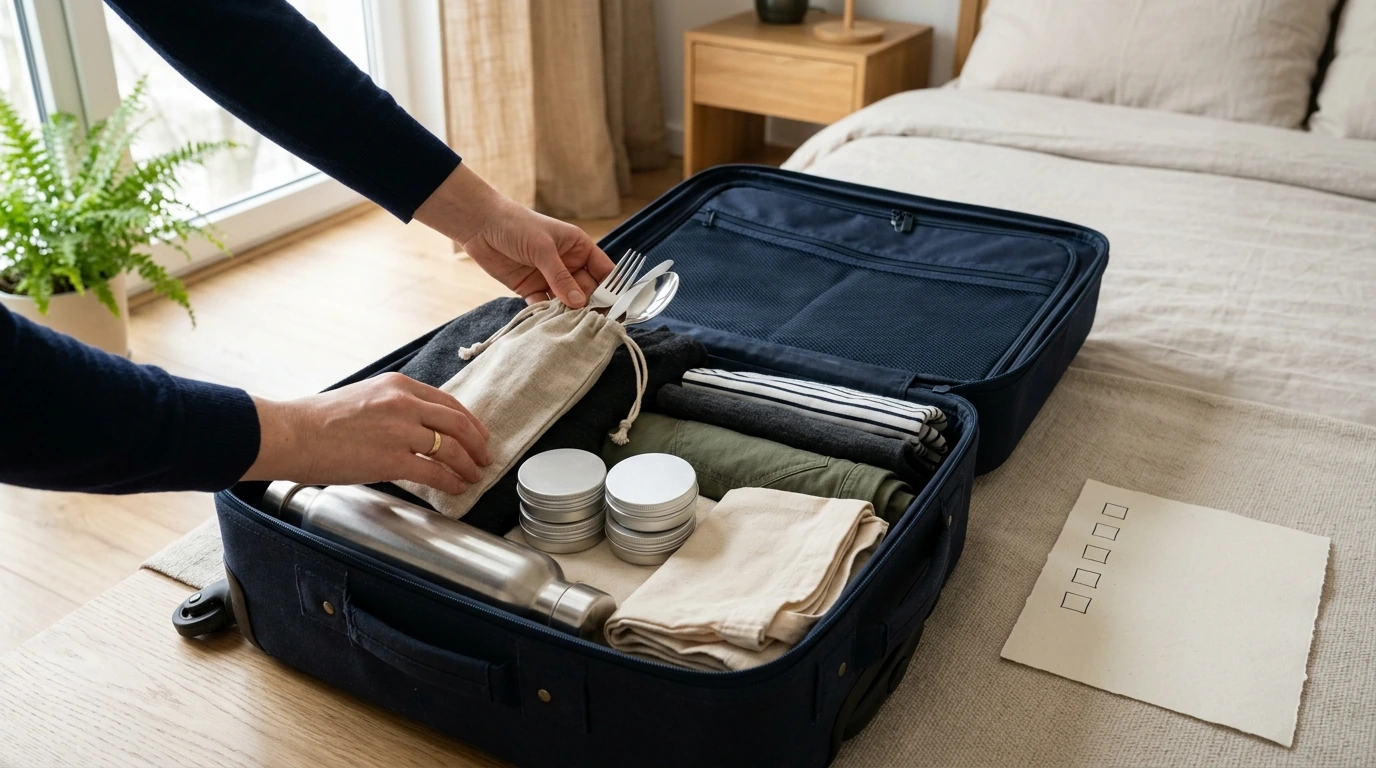
Transportation is only part of the footprint—what you bring (and throw away) matters. Build a simple zero-waste kit: refillable bottles, solid toiletries, a utensil set, a food container, and a compact laundry option for rewearing basics. For a step-by-step packing checklist, visit our guide here: Eco-Friendly Travel Checklist: Zero-Waste Packing.
FAQ
How can I reduce waste while traveling?
Carry reusables you’ll actually use daily, such as a water bottle, utensils, and a food container, and skip single-serve items. Choose refillable or solid toiletries and keep a small “grab-and-go” kit so you don’t end up buying disposables when you’re rushed.












Leave a comment